Inside the Bonus Ecosystem: How Major Operators Structure Their Initial Offers for New Players
Written by Drew Braun · Oct 13, 2026
Inside the Bonus Ecosystem: How Major Operators Structure Their Initial Offers for New Players
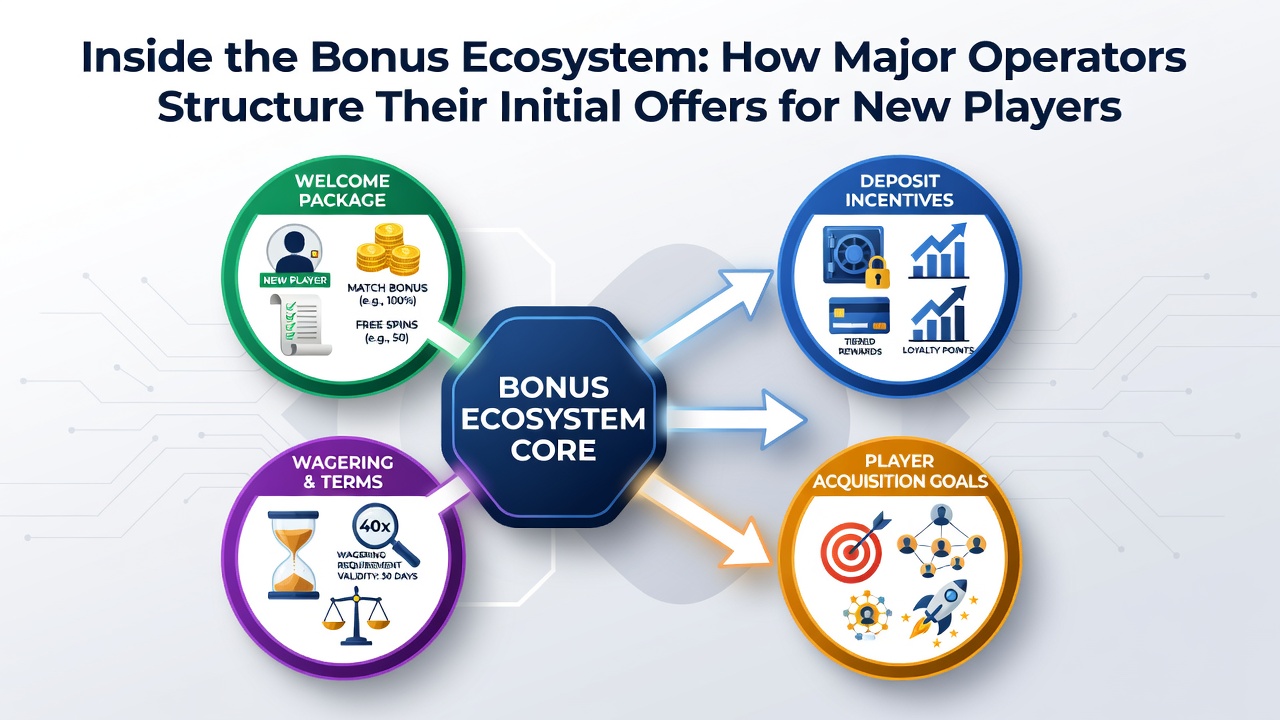
Operators across international markets build their initial offers around structured welcome packages that combine deposit matches, free spins, and risk-free bets, and these packages follow distinct patterns shaped by regulatory environments in places like the United States, Australia, and Canada as of October 2026. Major companies calculate bonus values based on expected player lifetime value, acquisition costs, and regional compliance rules while they adjust multipliers and expiration periods to balance player retention with responsible gaming standards.
Core Components of Welcome Structures
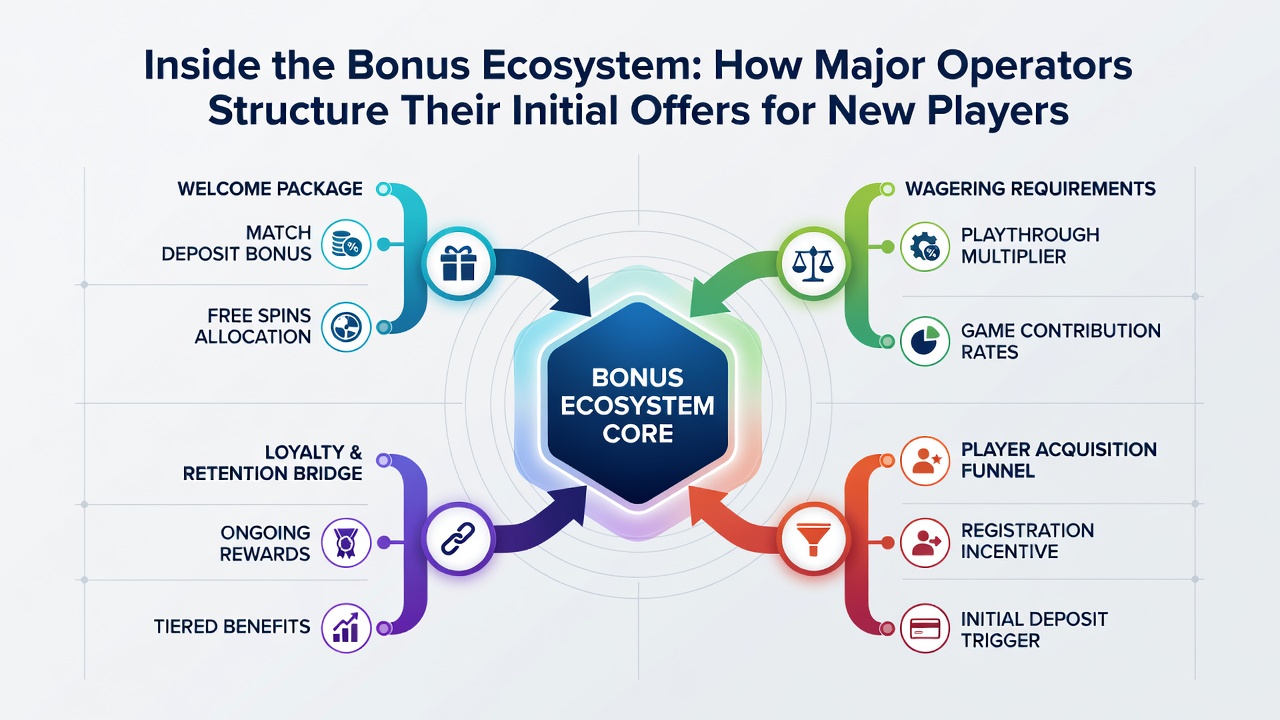
Deposit match percentages form the foundation of most initial offers, and operators typically set these between 50 and 100 percent on a player's first deposit up to a defined maximum amount. Free spins attach to casino-style products at fixed quantities such as 50 or 100, whereas sports-focused platforms add bonus bets that convert after a qualifying wager settles. Operators layer these elements into tiered systems where the total package value increases with larger initial deposits, yet they cap the highest tiers to control liability exposure.
Research from the American Gaming Association shows how these combinations drive sign-up volumes in regulated US states, while operators track redemption rates to refine future offers. Wagering requirements then determine how much play must occur before withdrawal becomes possible, and figures often range from 20x to 40x on the combined deposit and bonus amounts.
Regional Adaptations and Compliance Factors
Operators modify structures according to local rules, so in Australian markets they emphasize lower multipliers and shorter expiration windows to align with stricter advertising codes. Canadian provinces apply different approaches where some allow higher match percentages but enforce tighter verification processes before funds release. Data from government reports in these regions indicate that operators reduce bonus generosity when tax rates rise or when player protection measures tighten.
One operator in a US state recently adjusted its free spin allocation after compliance reviews revealed patterns of rapid playthrough followed by low retention, and similar adjustments appear across multiple platforms. Expiration periods now commonly fall between 7 and 30 days, and operators shorten these windows when data reveals low completion rates on longer offers.
Calculation Models Behind Offer Values
Operators employ predictive analytics to set bonus amounts, and they factor in average deposit sizes, game mix preferences, and projected churn rates when determining package sizes. A platform might offer a 100 percent match up to 200 dollars for players who select high-volatility slots, yet it reduces the match for those who prefer table games with lower house edges. These decisions rely on internal datasets that track which bonus types convert into sustained activity rather than one-time redemptions.
Industry reports from research institutions highlight how operators test multiple variants through A/B frameworks before rolling out permanent structures, and results often show that modest increases in free spin quantity produce higher initial engagement than equivalent cash match boosts. Yet the same reports note that excessive wagering multipliers correlate with higher complaint volumes in regulatory filings.
Player Segmentation and Targeted Delivery
Segmentation tools allow operators to deliver different offers to distinct user groups based on acquisition channel, device type, and predicted spend. Players arriving through affiliate networks often receive enhanced packages with added cashback elements, while direct website visitors see standard deposit matches. Operators monitor these channels closely because affiliate-driven traffic frequently demonstrates higher lifetime value when the initial offer includes flexible wagering terms.
Case examples from major platforms reveal that operators in competitive markets sometimes bundle referral incentives with the primary welcome package, creating secondary rewards once the new player completes verification and makes a deposit. This approach spreads acquisition costs across networks while maintaining control over the core bonus budget.
Conclusion
Operators continue to refine initial offer structures through ongoing analysis of redemption data, regulatory shifts, and competitive positioning across global markets. These systems balance player attraction with risk management by adjusting match percentages, wagering thresholds, and expiration rules according to region-specific requirements. Evidence from industry and government sources shows that successful structures maintain flexibility while complying with evolving standards in the United States, Australia, and Canada.